Building an Adaptive Strategy Practice
A practical model for turning uncertainty into structured strategic action.
18 March 2026 · Updated 18 March 2026 · Archive
Why this matters
Strategy work often fails because teams lock into static plans while the environment keeps moving. This model is designed to preserve direction without freezing adaptation.
Most organisations already collect enough signal to adapt well. The challenge is not data volume. The challenge is converting weak signals into coherent decisions with clear ownership and review loops.
Start from decision cadence, not document cadence
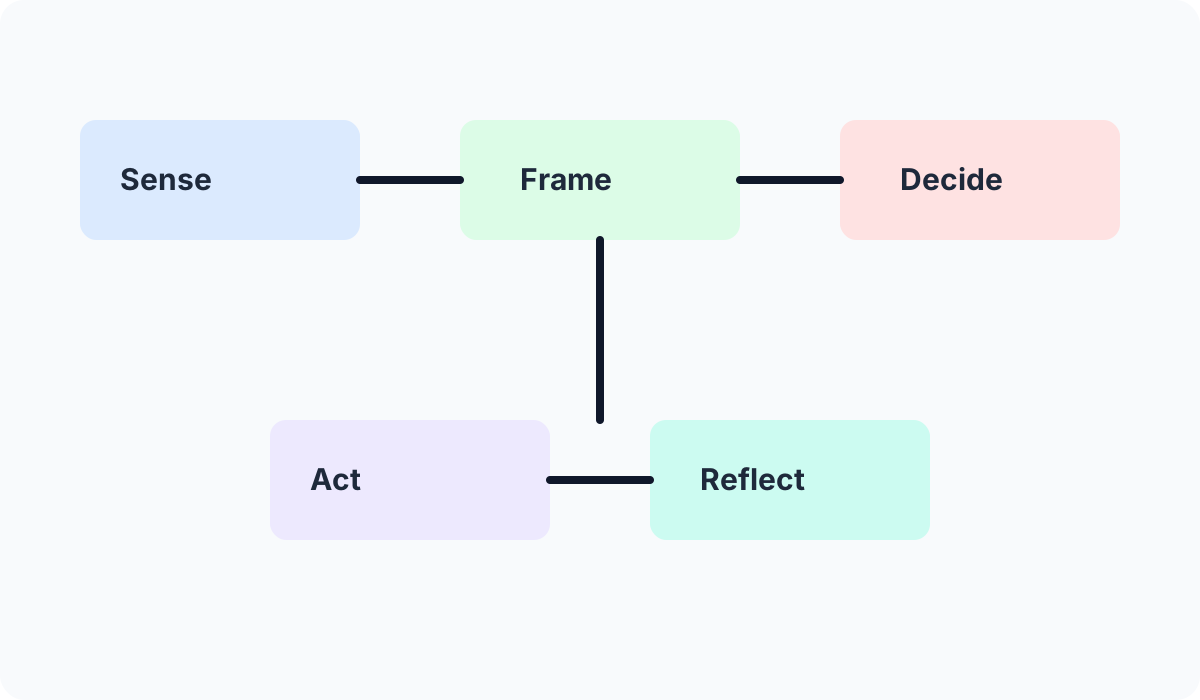
When strategy is treated as a quarterly slide deck, execution teams often lose context in between review cycles. Switch to a decision cadence where each cycle produces:
- the core uncertainties,
- explicit assumptions,
- decision options,
- chosen actions and confidence levels.
Use components to keep writing reusable
This platform supports MDX components directly, so editorial patterns can be reused across Articles and Projects.
Practical tip
Store recurring strategic frameworks as components or snippet templates. It reduces formatting drift and improves consistency when drafting with AI support.
Multimedia support in-context
External video embeds can be placed directly in content:
Example structured decision record
decision:
  question: "Should we enter market X in Q3?"
  assumptions:
    - demand_growth > 12%
    - onboarding_cost <= target
  confidence: medium
The goal is not complexity. The goal is a lightweight, durable system that supports better decisions over time.